

Japan is home to a plethora of ingredients and dishes rooted in local history and culture. Today, thanks to advances in logistics and technology, we can enjoy them far from where they were sourced. Still, there is something special about savoring them exactly where their stories began–an experience that can’t be replicated.
At Taishunken in Yokohama’s famous Sankeien Garden, that experience comes to life through Sankei Soba, a dish with over a century of history. Its origins trace back to when savvy businessman Sankei Hara (born Tomitaro Hara) created it for his own family table. Hara was a food lover who also enjoyed cooking, and is said to have developed the dish through tweaking and numerous iterations, sometimes drawing inspiration from the chefs who worked in his household. “He had a deep appreciation for art as well,” says Taishunken’s owner, Takehiko Saigo. “He thus paid close attention not only to flavor, but also to presentation.”
Taishunken’s location of Sankeien Garden is a nationally designated scenic site and the very same place where Sankei Soba was first introduced to the public. Designed by Hara himself, the garden once included his private residence and features historic buildings relocated from Kyoto and Kamakura, along with seasonal flowers that create a landscape visitors can enjoy year-round. In 1922, Hara hosted a Grand Tea Ceremony here to celebrate the garden’s completion—and Sankei Soba was served to guests for the occasion.
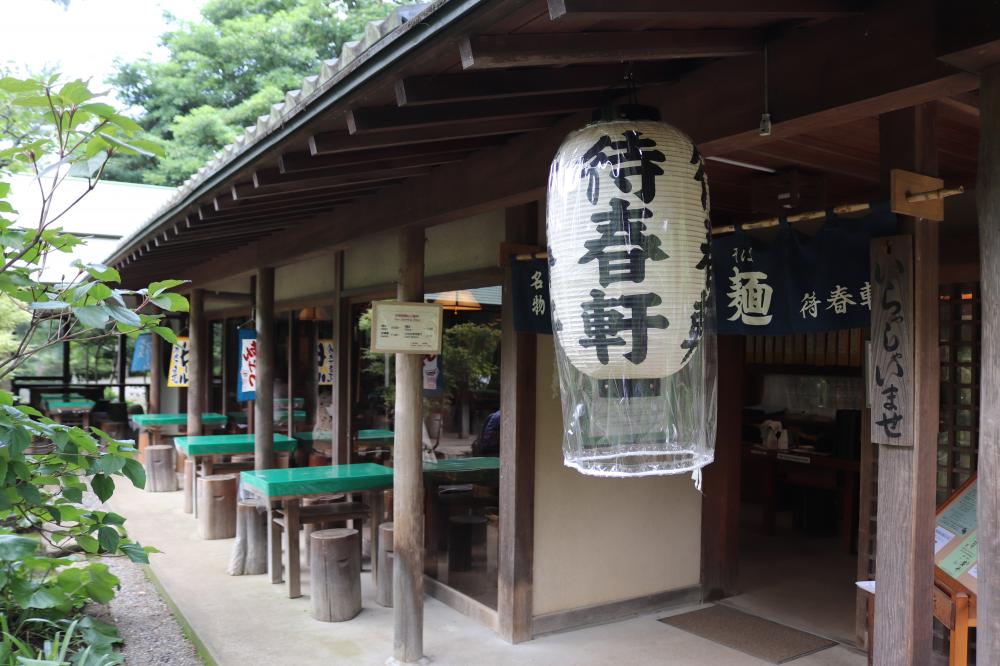
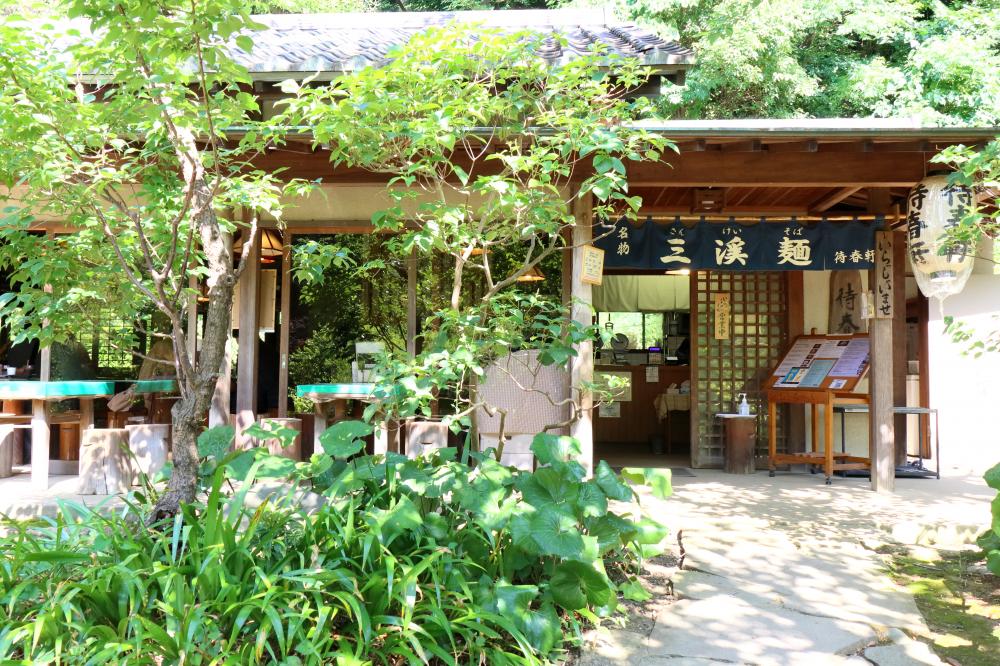
From the garden’s main gate, a short walk along the left side of the large pond leads to Taishunken. The restaurant was founded by the parents of the current owner, the aforementioned Saigo, and the recipe has been passed down from Haruko—Hara’s eldest daughter—without change. Sankei Soba can only be enjoyed here. Despite its name, the dish is actually made with wheat noodles similar to udon rather than buckwheat soba. In Japan, the term “soba” has sometimes been used more loosely to refer to noodles in general, which is how the name came about.
Sankei Soba (¥950; piled high, ¥1,100) is unlike any noodle dish I’ve encountered. For starters, there’s no broth. Instead, it’s served in a mixed-noodle style that feels surprisingly modern—especially considering its origins over a century ago. Warm noodles are topped with a rich, savory sauce, then finished with finely sliced ham, snow peas, and shredded egg, creating a vivid palette of pink, green, and yellow. The attention to visual harmony reflects Hara’s artistic sensibility.
The sauce itself is made by simmering finely chopped bamboo shoots, shiitake mushrooms, and ground pork. As you mix it into the noodles, you’ll notice a gentle tang from vinegar alongside the aroma of spices. The firm texture of the ingredients adds to the dish’s appeal, too. There’s even a subtle hint of Chinese-style noodles in the flavor. As a trader based in Yokohama, Hara was likely influenced by Chinese culture so it’s easy to imagine that such exchanges may have shaped this dish as well.
On this visit, I also enjoyed Kinako mochi (¥750, served with kelp tea) and a bowl of Matcha with traditional sweets (¥750). According to Saigo, both kinako and matcha have been popular with international visitors. The mochi was soft enough to cut easily with chopsticks, and was coated in subtly sweet roasted soybean flour. It was so good, I greedily gobbled up all four pieces, though it’s also perfect for sharing with a group.
The day of my visit fell between the plum blossoms and cherry blossom seasons. Soon, azaleas and water lilies will follow, each bringing new layers of color to the garden. Taishunken also offers covered terrace seating, where you can enjoy seasonal blooms such as irises just outside the restaurant.
A music event is scheduled for late May, so be sure to check their website for details. Come experience a piece of Yokohama’s history—left behind by the multifaceted Sankei Hara—with all five senses.